


Publicado en: Time
Por: Eric Cortellessa
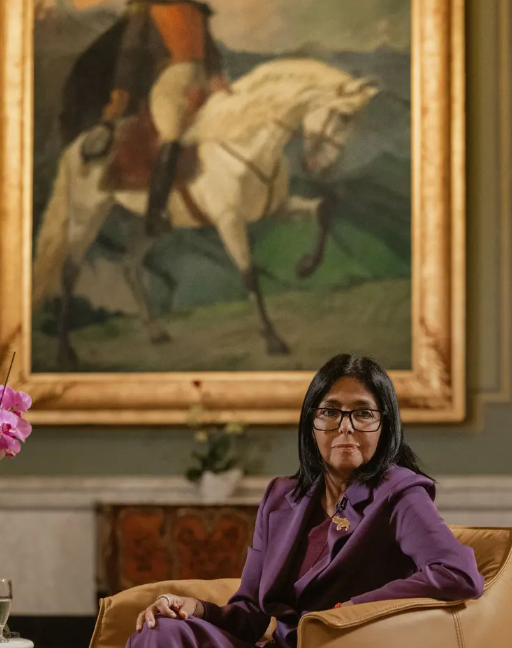
Delcy Rodríguez, the acting president of Venezuela, conducts the nation’s business out of the Miraflores Palace, a 19th century neoclassical mansion in the heart of Caracas. Gilded portraits of Simón Bolívar and Hugo Chávez gaze down on the ornate halls. Birds chirp in the manicured gardens. An unusually tight security detail shadows Rodríguez’s every step. The caution is understandable: Not long ago, the U.S. sent a Delta Force unit into her predecessor’s residence on a nearby military base to seize the man she had served for years.
Which may help explain Rodríguez’s careful manner. She speaks regularly with President Donald Trump and Secretary of State Marco Rubio, and her English is nearly flawless. Yet when she sits down with TIME for a rare interview with an American media outlet, she summons a translator. I suggest it would be easier to speak in English.
“When I do interviews, I like to do them in Spanish,” she says.
“I’m not sure that’s best for this one,” I say.
“It is best for me,” she replies with a faint smile.
It’s easy to understand her strategy. Speaking through an interpreter slows the conversation and gives Rodríguez greater control over the words that ultimately reach the page. It is the instinct of a disciplined operator who has spent decades in one of the world’s most unforgiving political systems—and who is now navigating an extraordinary diplomatic moment.
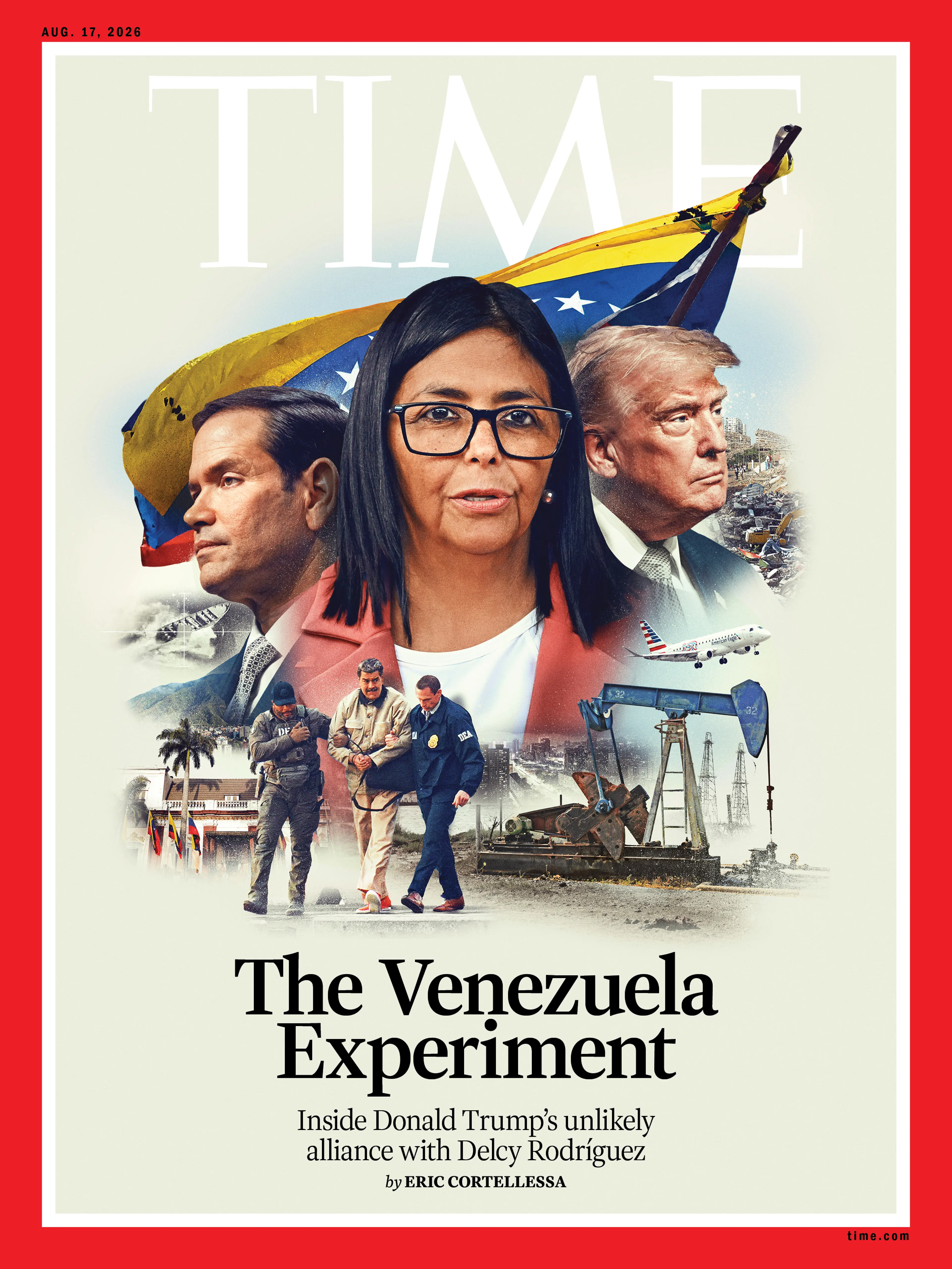
A socialist stalwart who rose through Chávez’s inner circle before serving for years as Nicolás Maduro’s second-in-command, Rodríguez, 57, was among the most recognizable faces of a movement largely defined for decades by its hostility toward the U.S. Today, she is the steward of a remarkable rapprochement with Washington. In exchange for U.S. support, she has allowed Trump and Rubio to turn Venezuela into a de facto vassal state, giving them an unprecedented degree of influence over her country.
In an hour-long interview, Rodríguez insists she is not surrendering Venezuelan sovereignty but opening the country’s economy in the best interests of its people. “I’m starting out by acting in good faith and trusting that these relationships can develop in good faith,” she tells me. “My current and future strategy has always been to ensure peace and tranquility in the country—tranquility and social and economic well-being.”
The nation Rodríguez now governs is not the same country that existed before the raid that captured Maduro. Before his fall, Venezuela was in stark decline: riddled with corruption, teetering on economic collapse, and ruled by an authoritarian who the U.S. and independent international observers say stole his 2024 election. Hyperinflation had wiped out citizens’ savings. Oil production, the lifeblood of the economy, had plummeted after years of graft, underinvestment, and sanctions. Nearly 8 million Venezuelans had fled, fueling the largest migration crisis in the history of the western hemisphere. Rolling blackouts, water scarcity, crumbling hospitals, and shortages of food and medicine had become routine. Once among Latin America’s wealthiest nations, Venezuela had devolved into one of its poorest.
Since Rodríguez’s ascension in January, signs of recovery have begun to emerge. Construction cranes have reappeared over parts of Caracas. Store shelves are fuller. Dormant oil fields are stirring back to life. American companies—including ExxonMobil, ConocoPhillips, Halliburton, and GE Vernova—have returned or begun negotiating new investments. Commercial flights between the U.S. and Venezuela have resumed for the first time since 2019. The dollar circulates openly. Foreign executives, diplomats, and investors are filling hotels—the lobby of the JW Marriott is now a gathering place for oil executives, while at the more exclusive Cayena Caracas, impeccably dressed financiers and government officials mingle amid polished marble and soft jazz, discussing exploration rights, infrastructure contracts, and Venezuela’s future.
All this has come at a price. Under an arrangement overseen by Rubio, the U.S. has become deeply involved in Venezuelan state affairs. In an arrangement described to TIME by three senior U.S. and Venezuelan officials, the U.S. Secretary of State supervises the framework governing Venezuela’s oil revenues and public finances, effectively administering a joint fund that gives Washington influence over everything from how the country’s export earnings are allocated to the reopening of the energy sector to preferential treatment for American companies. Rubio and Rodríguez are in near daily contact through phone calls and WhatsApp messages, officials say. Rodríguez consults him on domestic appointments, including her selection of a Defense Minister, according to three officials familiar with the arrangement. “Basically, you have what they call the Rodrígato operating,” says James Story, a former U.S. ambassador to Venezuela under Presidents Trump and Biden, describing an arrangement in which Rodríguez’s government remains in power while carrying out Washington’s strategic priorities. “They are doing everything that we ask them to do.”
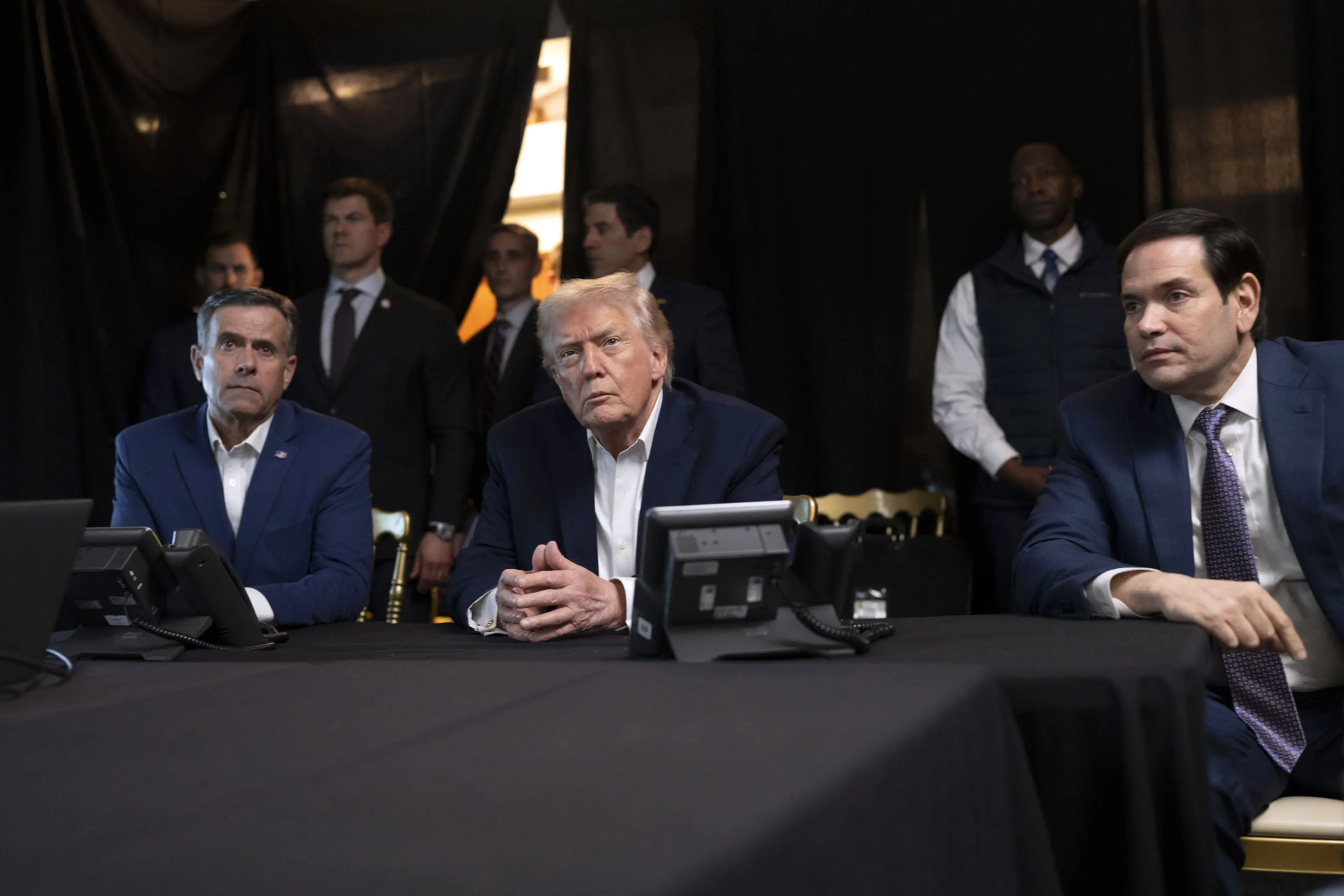
U.S. President Donald Trump, CIA Director John Ratcliffe (L) and Secretary of State Marco Rubio monitor U.S. military operations in Venezuela, from Trump’s Mar-a-Lago Club on January 3, 2026 in Palm Beach, Florida. Molly Riley—The White House via Getty Images
Washington and Caracas now cooperate on intelligence and counternarcotics operations too. In June, the partnership resulted in the killing of Niño Guerrero, the leader of the transnational criminal organization Tren de Aragua, at his compound in Venezuela’s Bolívar state. Rodríguez says Venezuela supplied the intelligence that located Guerrero and deployed forces on the ground, enabling the U.S. airstrike. “The important thing is that there are opportunities for joint cooperation,” she tells me. “Against drug trafficking, for example, and against transnational organized crime. That is very important to us.” Thousands of political detainees have been released under an amnesty framework encouraged by the U.S., while negotiators continue hammering out dozens of additional economic agreements.
Venezuela has become a case study of Trump’s ability to reshape the world in pursuit of his own priorities, unbound by the diplomatic conventions that restrained his predecessors. He launched an extralegal campaign of force and coercion, beginning with strikes on suspected drug-smuggling boats and culminating in the capture of a sitting head of state, who was brought to the U.S. to face drug and weapons charges. Maduro is now in a federal jail in New York City, replaced by a subservient successor the Trump Administration believed would comply with American interests while preserving stability in Caracas.
Small and slender, dressed in tailored suits and oversize glasses, Rodríguez projects the demeanor of a technocrat rather than a firebrand. Cooperation with the U.S. has allowed her to consolidate power during a period of tremendous upheaval. The bargain is as brazen as it is fragile, and the leverage runs both ways. Over two decades, Rodríguez established herself as one of Chavismo’s indispensable figures. There is no guarantee another leader could sustain such an arrangement—or would choose to align Venezuela with Washington rather than Beijing or Moscow.
For Rodríguez, the role requires a delicate balancing act. Few Venezuelans mourn Maduro’s departure after years of oppression and economic collapse. But relief at his ouster has not translated into enthusiasm for his successor. To many, she is more sellout than savior. But her future rests less on public affection than on her ability to satisfy Trump’s demands, and to convince citizens that becoming a client state of a despised foreign power is in the national interest.
When a major earthquake struck Caracas in June, killing more than 5,000 people and causing an estimated $6.7 billion in damages, the new relationship with Washington produced dividends. The State Department assembled a $300 million reconstruction package, and the U.S. Southern Command provided military support for the relief effort. An aide to Rodríguez points to moments like that as proof that the bargain can be a boon, even as Venezuelans criticized her for taking too long to address the catastrophe publicly, waiting eight days before holding a press conference.
Whether the arrangement will ultimately improve the lives of ordinary Venezuelans or merely enrich a privileged elite remains unclear. Rodríguez has taken few steps to institute democratic reforms. “Millions of Venezuelans that want to come back are only going to do it if they are certain that their rights will be respected,” says María Corina Machado, the opposition leader who won the 2025 Nobel Peace Prize for promoting democratic rights in Venezuela and now lives in exile. To Machado, who was barred from running in Venezuela’s most recent elections, Rodríguez has capitulated to Washington in pursuit of power and self-preservation. “She’s willing to give away anything she’s asked for—anything,” Machado says. “That’s the way those that have committed crimes reason.”
Rodríguez rejects the criticism. “I try to ensure that another country’s domestic policy does not affect Venezuela,” Rodríguez tells me. “I hope that Venezuela does not become a pawn in any other country’s political agenda.”
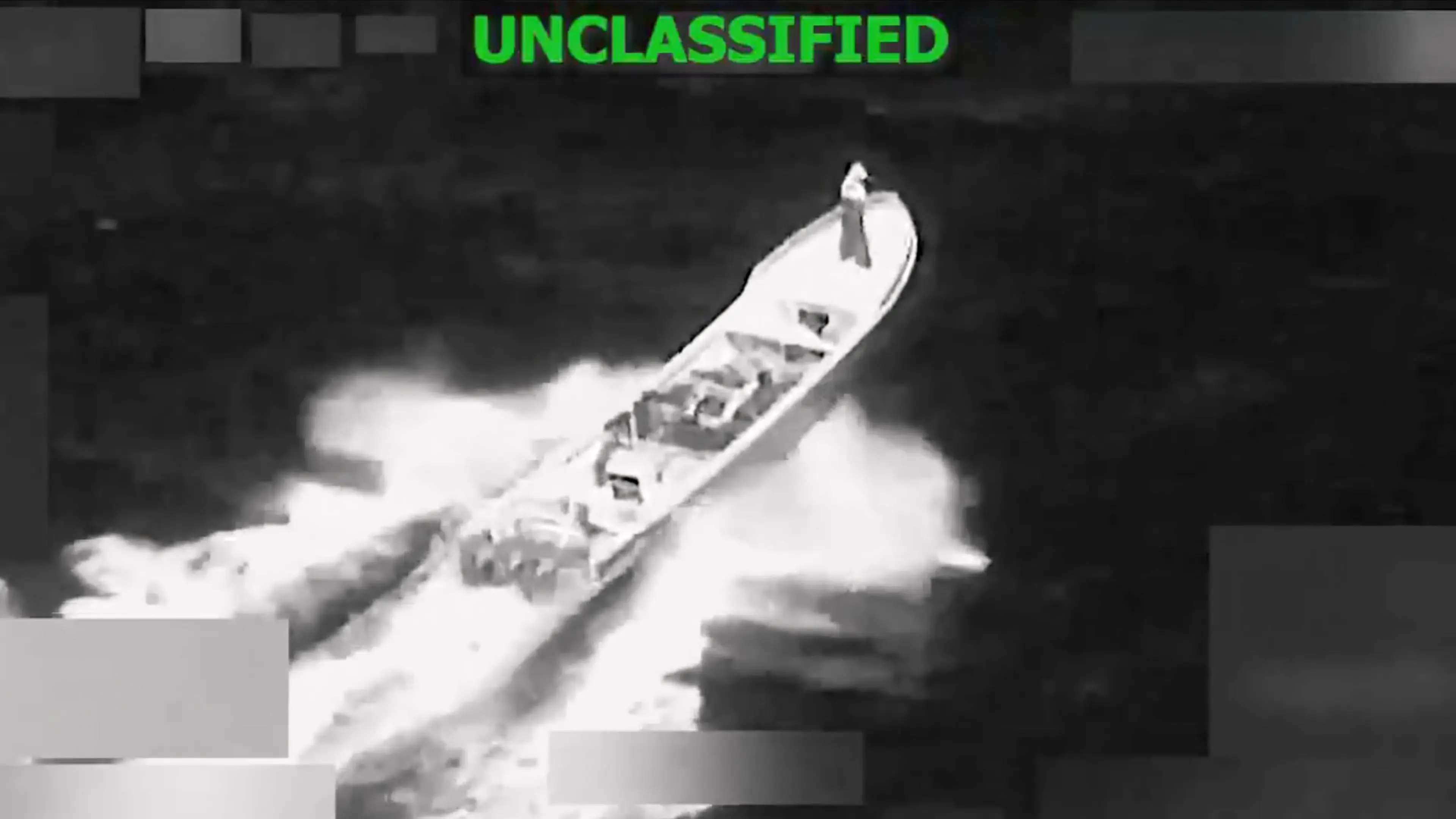
This image from video provided by U.S. South Command, shows a vessel accused of trafficking drugs in the eastern Pacific Ocean shortly before it was destroyed by the U.S. military, killing two and injuring one, on Jan. 23, 2026. U.S. Southern Command/AP
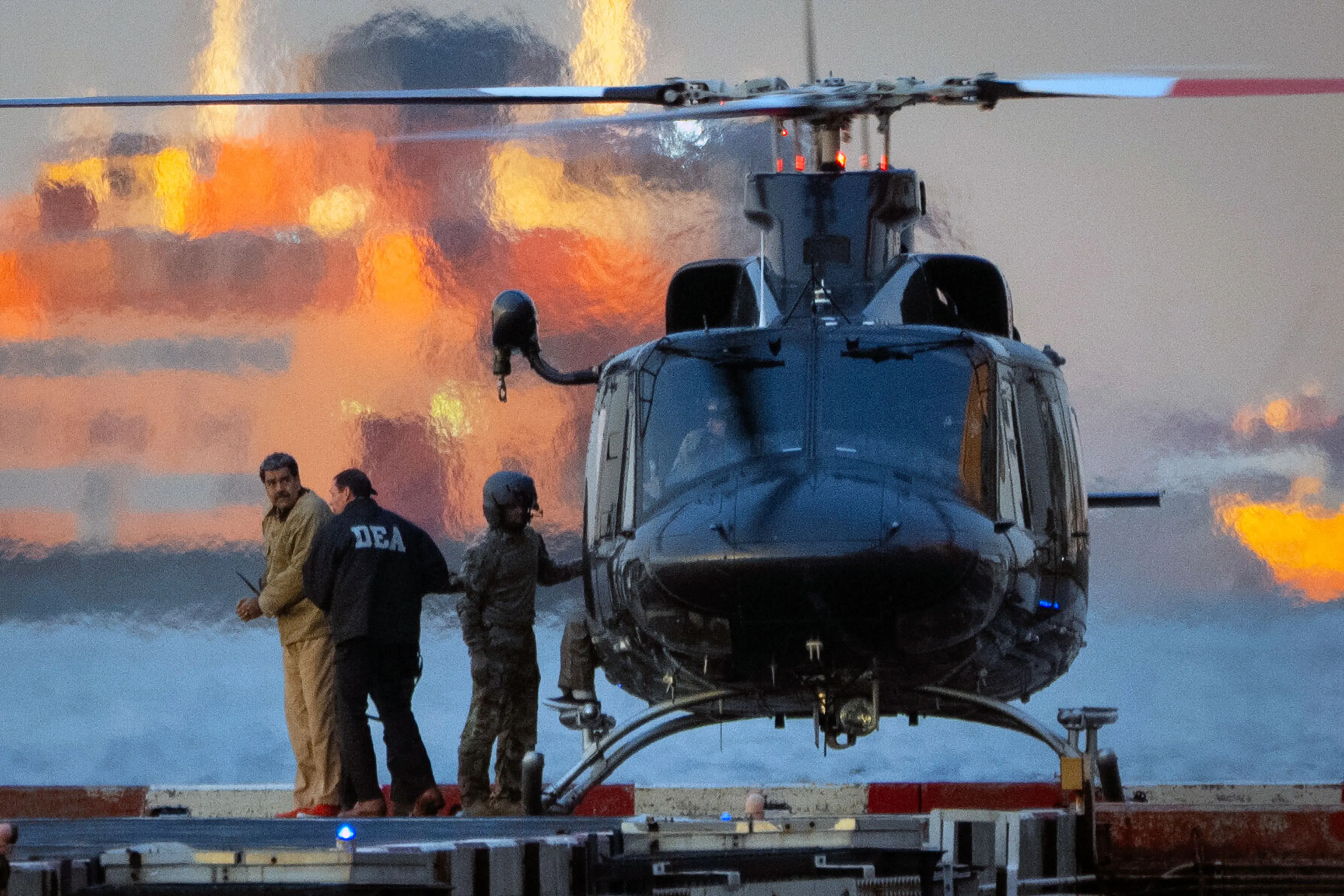
Nicolas Maduro, the ousted president of Venezuela, is escorted off a helicopter en route to the federal courthouse in Manhattan on Monday morning, Jan. 5, 2026. Vincent Alban—The New York Times/Redux
As we sit in a room of polished marble and gold leaf, Rodríguez recounts the chain of events that propelled her to power with the soft, measured cadence of someone accustomed to exercising authority without raising her voice. On Jan. 2, she recalls, she met with Maduro to discuss Venezuela’s economic plans and the ongoing naval blockade the U.S. had imposed since December. Afterward, she flew to Margarita Island, the Caribbean resort off Venezuela’s northern coast, where her brother and nephews were vacationing. She arrived around 11 p.m., only a few hours before the frantic phone calls began.
In the early hours of the morning, U.S. military units infiltrated Maduro’s compound inside the Fort Tiuna military complex as he slept. They found him in his pajamas, arrested him, and whisked him and his wife out of the country. “We went through a moment of great anguish when we thought they had killed the President and the First Lady,” Rodríguez tells me. “Then we learned they were taking him to the United States. That changed the situation completely.”
One of Rodríguez’s first calls was to an unlikely figure: Sheik Tamim bin Hamad Al Thani, the Emir of Qatar, with whom she had cultivated a relationship. “‘Now the responsibility rests on your shoulders,’” Rodríguez recalls him saying. “‘You have a responsibility to preserve Venezuela.’”
According to Rodríguez and U.S. officials, Qatari officials helped arrange a conference call between her and Rubio on the afternoon of Jan. 3. “Is Maduro alive?” she asked. Rubio assured her he was; to prove it, U.S. officials sent photographs of him in a jumpsuit aboard a helicopter en route to New York. The Secretary of State then delivered an ultimatum: meet U.S. demands or face continued military pressure. Rodríguez agreed. An aide says she saw no viable alternative. “If I’m completely honest,” Rodríguez tells me, “we never thought the capital of the country would be attacked, much less imagined what happened to the President and the First Lady.”
She spoke to Trump for the first time the following morning. “We discussed how diplomatic relations between Venezuela and the United States could be established and what areas of common interest might be identified,” Rodríguez says. Trump wanted access to Venezuela’s vast oil reserves, seeing them as a way to increase global supply, lower energy prices, and strengthen the U.S. economy ahead of the midterm elections. But he delegated the logistics to Rubio, the son of Cuban immigrants, for whom uprooting leftist regimes in Latin America is a long-standing priority. As Secretary of State, he suddenly had an opportunity to pursue that ambition.
Under the agreement, the U.S. would receive the proceeds from most Venezuelan oil exports and then disburse the money back through Venezuela’s banking system. The structure, one senior U.S. official explains, would function like an escrow account: Washington would release funds only as Caracas met agreed-upon conditions. By controlling the flow of revenue, the U.S. would gain leverage over how the money was spent while limiting corruption and the influence of rival foreign powers. In return, Rodríguez would remain President, buoyed by an influx of American investment and the economic benefits of renewed integration. The Trump Administration saw it as a straightforward trade-off: political stability in exchange for economic oversight, energy access, and the strategic realignment of one of the world’s most resource-rich countries.
One morning a few weeks later, Rodríguez received an unexpected call from Rubio. “I’m putting you on the line with someone who wants to say hello,” Rubio told her. It was Trump. According to Rodríguez, the President told her he was pleased with her cooperation following the Maduro extraction. As a reward, he said, the U.S. would restore commercial flights to Venezuela. By April, American Airlines resumed service between Miami and Caracas. In May, United Airlines launched flights from Houston.
Trump’s fixation on Venezuela had grown since his return to office. He dispatched Rubio to El Salvador to broker an unprecedented agreement with President Nayib Bukele. As part of Trump’s mass-deportation campaign, the U.S. transferred hundreds of detained Venezuelan migrants to El Salvador’s notorious CECOT prison, drawing fierce criticism from human-rights groups and immigration advocates. Trump justified the move by saying the migrants were members of Tren de Aragua, the Venezuelan gang he portrayed as the embodiment of the border crisis.
The situation intensified when intelligence reports allegedly indicated vessels departing Venezuela were transporting drugs toward the U.S., Administration officials say. Rubio and Defense Secretary Pete Hegseth pressed Trump to respond with a campaign of military strikes against the alleged drug-smuggling boats, according to two senior White House officials. Trump authorized the strikes, hoping military pressure would compel Maduro to dismantle trafficking networks, crack down on criminal gangs, and open Venezuela’s vast oil sector to American investment. When Maduro was captured, U.S. boat strikes had killed more than 100 people over the course of 10 months, according to Just Security; as of June 21, the number of deaths has more than doubled, with 215 killed in 66 strikes. Many legal experts argue that the strikes on suspected Venezuelan drug-trafficking vessels violated both international law and the limits of presidential war powers under the U.S. Constitution. “One state is only really supposed to use force against another state when that other state has committed an armed attack against it or threatened imminent armed attack against it,” says Scott Anderson, a former State Department official and national-security law expert at the Brookings Institution.
But while Trump saw a chance to secure access to Venezuela’s oil reserves, Rubio saw an opportunity to remake the balance of power in the western hemisphere. Deputy White House Chief of Staff Stephen Miller soon joined the effort. Increasingly eager to expand his portfolio beyond immigration into national security, he viewed Venezuela as the point where those issues converged. Miller argued limited military pressure would never change Maduro’s calculus, a senior White House official tells TIME. He pushed for a more aggressive approach. (Miller declined to comment for this story.)
As Rubio, Miller, and their advisers continued briefing the President on the boat strikes, they emphasized Venezuela’s growing importance as a platform for American adversaries, including Cuba, Russia, and China, which had deepened their foothold through oil, military and intelligence cooperation, and economic support. “The type of influence that existed in that country is incompatible with U.S. interests,” a State Department official says. Senior U.S. officials were determined to change Maduro’s behavior—or remove him from power. “Our objective was simple: persuade Maduro to sever those relationships,” the State Department official adds. “He was unwilling to do that.”
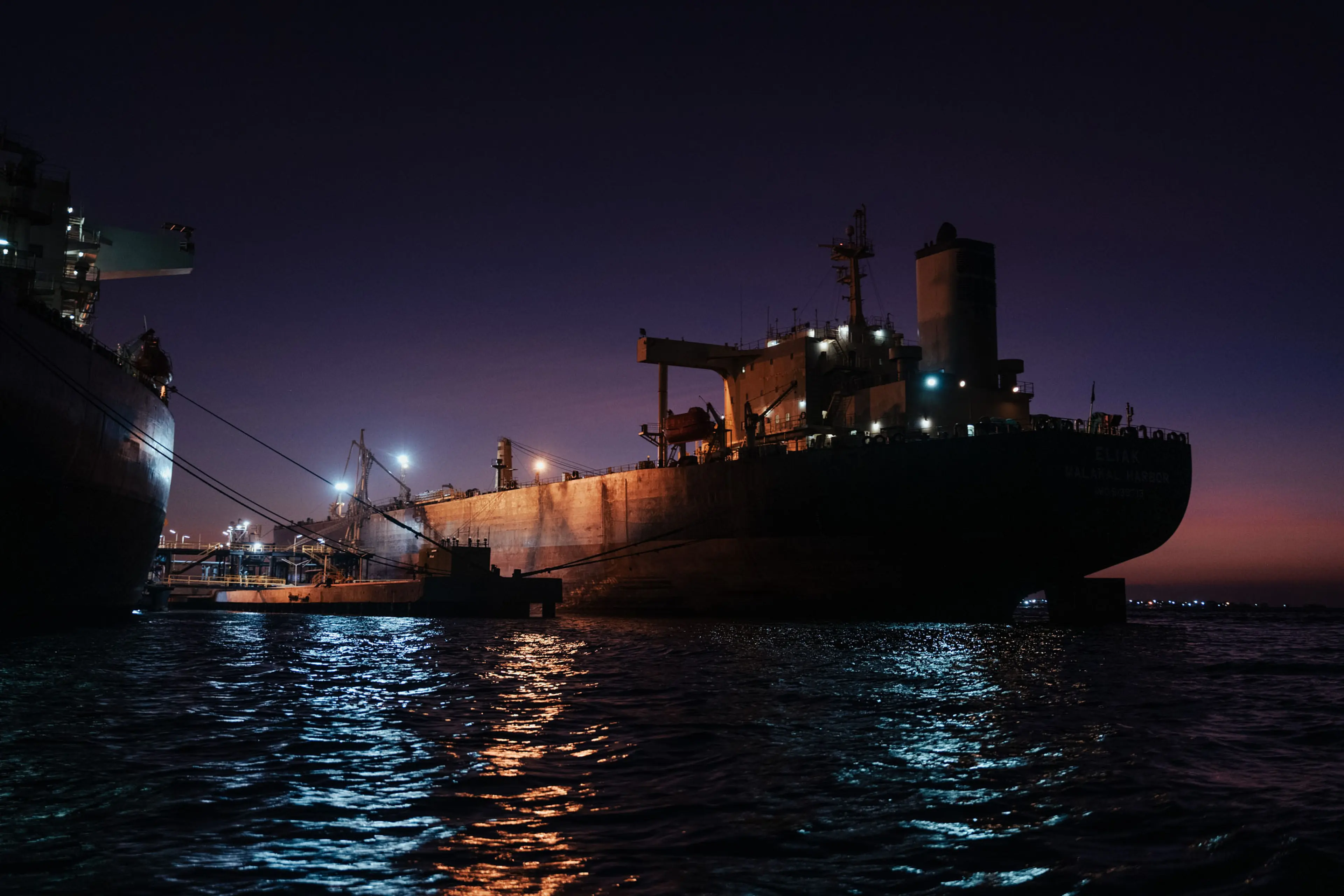
Oil tankers at the Cardon refinery in Punta Cardon, Venezuela, on Jan. 29, 2026. Adriana Loureiro Fernandez—The New York Times/Redux
According to the State Department official, the Administration persuaded Turkey to offer Maduro safe harbor if he agreed to leave Venezuela peacefully. He refused. “The inflection point was in December, when we sent him an offer via the Turks, and the offer basically was, if you leave the country permanently to Turkey or some other acceptable place, we’ll leave you alone, but you’ve got to leave the country,” another State Department official says. “He basically ignored it. He had multiple off-ramps where he could have left and lived happily ever after somewhere else, giving us the opportunity to work with someone else inside the government to make those changes. Instead, he posted silly videos of himself dancing and singing.”
That “someone else,” Rubio believed, was Delcy Rodríguez.
But international diplomats viewed Rodríguez as a technocrat rather than an ideological hard-liner. “She was seen as a more pragmatic figure,” says Christopher Hernandez-Roy, a Latin America expert at the Center for Strategic and International Studies. “They picked her with a gun to her head, but she seemed to understand the country’s economics, and she had long been deeply involved in its oil sector. That’s obviously one of the Administration’s highest priorities—the recovery of Venezuela’s oil industry.” Rodríguez had long advocated for greater economic openness. She had also been responsible for attracting foreign investment and rebuilding relationships with international energy companies. According to multiple officials, Rubio concluded that Rodríguez was a realist with a grip on the levers of government, and who would be willing to meet Washington’s demands.
Rodríguez argues the relationship has already reaped benefits for the country. During the Maduro years, Chevron had been the only major U.S. oil company to maintain a significant presence. Now it may be joined by ExxonMobil, ConocoPhillips, and Halliburton. U.S. Interior Secretary Doug Burgum and Energy Secretary Chris Wright are negotiating more than 30 agreements that would give American firms a foothold in Venezuela’s energy sector. “The most important thing is that companies from the United States are returning and arriving,” Rodríguez says.
The shift reflects the carrot Trump has dangled: renewed access to American capital and global markets. The bet is that economic integration can induce geo-political alignment after decades of Chavista rule. It’s not yet clear, though, how much of this influx of capital has reached ordinary Venezuelans. Reliable polling remains scarce under the country’s authoritarian system. Venezuelans celebrated Maduro’s removal in large numbers, but many remain wary of Rodríguez, viewing her as someone who abandoned the cause to which she had devoted her political career. “The Venezuelan people don’t miss Maduro, right?” an aide to Rubio tells TIME. “They fully recognize that he was a bad actor and a destabilizing influence. The oil was tremendously valuable to the people of Venezuela. It was stolen by very corrupt elites and used to pay off massive debts to China, Cuba, and others. No more.”
To some Venezuelans, however, Rodríguez is a new face for the same regime. She spent years helping administer a government accused by international investigators of widespread human-rights abuses, including arbitrary detention, torture, and extrajudicial killings. “She was part of a regime that systematically violated human rights,” says Diego Area, an expert on Venezuelan politics at the Atlantic Council. “She comes from normalizing practices that are considered crimes against humanity.”
For all the changes under way in Venezuela, the biggest one—a transition to genuine democracy—still appears distant. Rubio sees it as part of his mission to rid Latin America of its remaining socialist autocracies and lay the groundwork for Venezuela to one day hold a legitimate election and complete a democratic transition, according to a State Department official. At his behest, Rodríguez’s government enacted an amnesty law in February covering political violence from Chávez’s rise in 1999 through the present. (The law includes those accused of participating in the 2002 coup attempt against Chávez and individuals implicated in violent unrest in 2014 and 2017.) Venezuelan authorities say roughly 9,000 detainees have been released since the passage of the amnesty law. Rodríguez says she is prepared to have the process independently reviewed. During our interview, she says she has asked the U.N. Human Rights Office to audit the releases, arguing that outside scrutiny will confirm the government’s compliance with its commitments.
But there are few signs that Venezuela is moving quickly toward free and fair elections. “Trump’s not focused on democracy building,” says Story, the former ambassador to Caracas. “If anything goes bad, it increases instability and further erodes the chance of companies coming in and making investments. That’s the fear.”
Rodríguez expresses little urgency either. “Venezuela will hold elections when it is ready,” she tells me. “There are extremist groups that called for military aggression against Venezuela, and the Venezuelan people—especially those who experienced the attack firsthand—feel a great deal of fear,” she says, referring to the country’s competing power centers and the persistent risk of political violence.
But when will that moment come? What conditions must exist before Venezuela holds open elections? “I feel that moment will come when all of the country’s political actors reach an understanding and we can tell the nation that we, as politicians, are ready,” she says, skirting the question. Rodríguez says she would welcome international election observers, provided they respected Venezuela’s sovereignty.
When I ask whether she intends to run for President herself, she pauses. “I don’t know,” she says.
Then I ask the question that hangs over every discussion of Venezuela’s future: Would Rodríguez allow Machado to return and compete? Rodríguez sidesteps it. “We have to move on to a new political era,” she says.
“So the answer is no?”
“My answer isn’t no,” she replies. “My answer is that there will be a political moment when coexistence and peaceful coexistence will be possible.”
The answer doesn’t mollify Machado. “I understand the U.S. government decided to start with the process of stability, but in order to make that sustainable, you certainly need legitimacy,” she says. “They fear an election because they fear the people, they fear popular sovereignty. They know what the Venezuelan people desperately desired.” Rodríguez’s halting response to the tragic earthquake, Machado adds, “exposed the true nature of the regime: its lack of humanity, its display of infinite corruption and incompetence.”
For Rodríguez, everything comes back to survival. “She needs to follow the guidance of the U.S. government, which at some point will include renewing democratic institutions and rules,” says Area. “She will do it not because of her democratic commitment, but as a means to achieve her political objectives.”
That would be not simply surviving politically, but creating conditions under which she—and perhaps Chavismo itself—can survive after power. She wants guarantees that she—a woman whose father was killed by the state—can remain in Venezuela without fearing imprisonment or retribution from a future government. “That’s what survival means for her,” Area says. “To make it so the system will be stable and able to govern itself, which will potentially include her being able to participate in the new Venezuela. It’s about survival.”
For now, Rodriguez is keen on reintegrating the nation into global markets: diversifying the economy, attracting long-term foreign investment, and ensuring that Venezuela’s prosperity no longer depends on a single commodity. The day before our interview, executives from General Electric sat across from Rodríguez discussing ways to modernize Venezuela’s aging electrical grid.
(General Electric did not respond to a request for comment.)
Whether these ambitions survive Trump’s presidency remains uncertain. Current U.S. foreign policy is animated by the application of leverage, economic incentives, coercion, and transactional dealmaking to draw former adversaries into America’s orbit. Venezuela’s future will depend not only on Rodríguez’s ability to manage the relationship with her current counterparts, but also on whether Trump’s successor embraces the strategy or chooses another path.
As our interview comes to an end, we wander through the sunlit gardens of the palace. I tell Rodríguez I’m flying home the next day, connecting through Miami on one of the newly restored commercial routes. She smiles. Pretty soon, she says, I can skip the layover. “Maybe next time,” she says, “fly from Washington to Caracas.” —With reporting by Leslie Dickstein