


Published in: The Hill
By: Dany Bahar
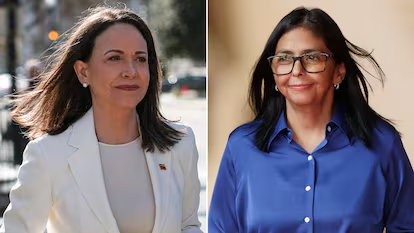
Venezuelan opposition leader María Corina Machado was awarded the 2025 Nobel Peace Prize this year, a powerful symbol of the country’s democratic struggle. She recently traveled to Oslo against all odds — leaving Venezuela with the help of the U.S. administration after spending more than a year in hiding to avoid persecution by the Maduro regime. She arrived in time to take part in the celebrations, even if not to accept the prize herself.
That same day, on the other side of the Atlantic, tensions between Washington and Caracas escalated as the Trump administration seized a Venezuelan oil tanker. This comes as U.S. military forces maintain a visibly heavy presence in the Caribbean.
In light of all this, some observers warn that this combination of pressure could further destabilize Venezuela — already an extremely fragile state — and trigger a new wave of emigration. It is an argument with intuitive appeal: If economic sanctions supposedly fueled the exodus, then military posturing should make things even worse.
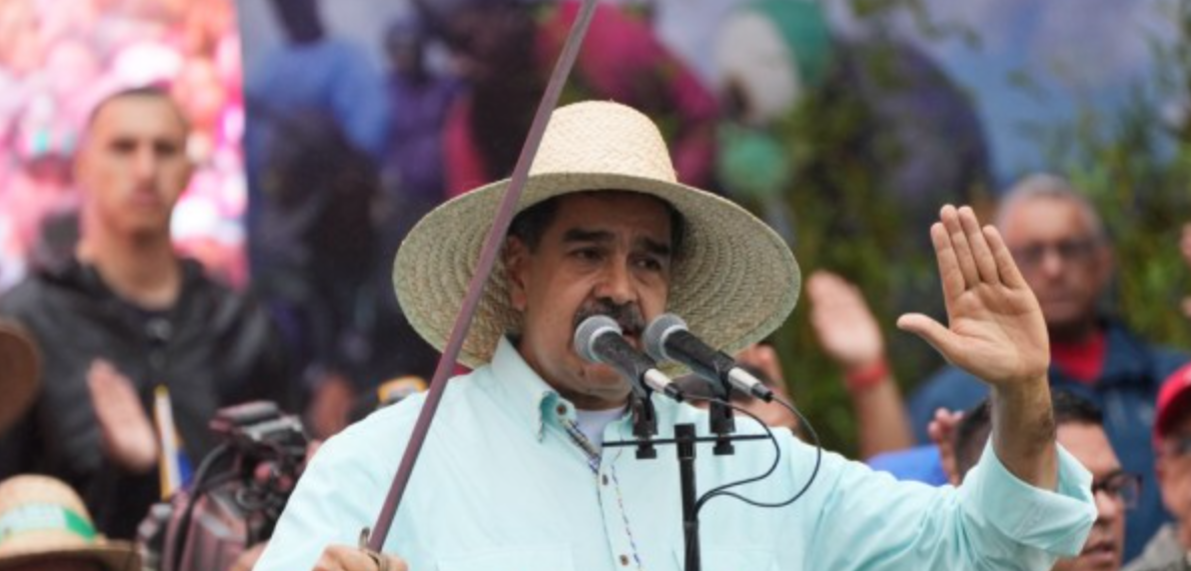
But this logic collapses under the weight of the evidence. Sanctions did not cause Venezuela’s migrant crisis, just as military deterrence will not intensify it. The single variable that reliably produces more migration is the same one keeping Venezuela trapped in authoritarian stagnation: Nicolás Maduro remaining in power.
If the past can help us anticipate future migration flows, the pattern is clear: Venezuelans have fled not in response to U.S. pressure but to their own government’s growing consolidation of authoritarian power.
I say this as someone who has spent years rigorously studying Venezuelan migration and speaking directly with Venezuelans who fled. The stories that migrants tell match what the data show: People are escaping a failed state.
To understand the scale of the tragedy, it is important to remember what Venezuela once was. For most of the 20th century, it was an immigrant-receiving country that offered opportunity and stability. Spaniards, Italians, Portuguese, Lebanese, Colombians and many others built new lives there. My own grandparents, who survived the Holocaust, were welcomed into Venezuela in the late 1940s. That a country with that history should become the region’s largest exporter of migrants is the clearest indication of a profound internal collapse.
That collapse long predates U.S. sanctions. In a 2019 Brookings study that I co-authored, we found that by 2016 — a full year before the first set of financial sanctions was imposed — food imports to Venezuela had already fallen more than 70 percent from their peak. Imports of medicine and medical equipment had collapsed. Infant mortality had risen sharply, even as it declined elsewhere in Latin America.
The Venezuelan minimum wage’s purchasing power, measured in calories, had fallen 92 percent from 2010 up to the moment sanctions were imposed.
The conclusion is unavoidable: Venezuela’s largest economic and social free fall occurred before sanctions existed. These outcomes came from inside the country — from years of mismanagement, expropriations, corruption and the hollowing out of state capacity. They were not prompted by Washington. By 2018, the exodus was well underway, with nearly 2 million Venezuelans having left already by then.
What happened next provides a second test. If Venezuelans were fleeing because of American pressure, then migration should have eased when Washington softened its approach. Yet during the Biden administration — when the U.S. pursued negotiations with Maduro, granted sanction exceptions to Chevron to operate in the Venezuelan oil industry and avoided escalation — the number of Venezuelans arriving at the U.S. southern border hit record highs. In 2023 alone, more than 335,000 Venezuelans crossed. That is more than had crossed during the entire previous decade.
A study I conducted helps explain why. Using monthly data from 2020 to 2024, we found that Venezuelans left in greater numbers when oil income was higher — meaning when the regime was stronger, not weaker. Higher oil revenue strengthens Maduro’s ability to repress dissent, fund patronage networks, and signal that political change is unlikely. For ordinary Venezuelans, a more entrenched regime reduces hope and increases the incentive to flee.
This matches what migrants tell me. In countless conversations on the Colombian border in Cúcuta and across South America, Venezuelans cite the same reasons for leaving: the impossibility of earning a stable income, the collapse of basic services, insecurity and the certainty that life will not improve under an authoritarian regime. These motivations have remained consistent regardless of U.S. foreign policy.
This is also precisely why the recent U.S. decision to eliminate Temporary Protected Status for Venezuelans is such a huge policy mistake. It is inconsistent to acknowledge the criminal nature of the Maduro regime on the one hand and to strip legal protections from the very people fleeing it on the other.
Until Maduro leaves power — and Venezuelans regain the rights they have been denied — removing Temporary Protected Status only deepens migrants’ suffering and pushes them out of the formal labor market. It is a lose-lose outcome: Venezuelans fall into danger, and the U.S. loses taxpayers, workers, and contributors to Social Security at a moment when more workers are needed.
Understanding these realities is essential for sound policy. Misdiagnosing the forces behind Venezuelan migration leads to ineffective responses. The flows will not slow until Venezuela regains economic stability, rebuilds its institutions, and restores basic rights. Venezuelans expressed their demand for change clearly in the July 2024 election, when they overwhelmingly chose Edmundo González as their next president. The Maduro regime refused to recognize that result and remained in power through repression, following a familiar authoritarian script across the ideological spectrum.
The Venezuelan exodus is not a reaction to American pressure; it is a reaction to Venezuelan collapse. As the U.S. debates its next steps in the region and the policy tools at its disposal, it must begin with an accurate understanding of why Venezuelans flee. Only then can policymakers craft responses that are effective, principled and grounded in reality.